

With periods of hot weather becoming increasingly common, assessing heat risk and supporting horses to remain safe and comfortable is a key welfare consideration.
NEWC President Dr David Marlin, an equine physiologist with internationally recognised expertise in equine exercise physiology and thermoregulation, has shared guidance on the use of the Wet Bulb Globe Temperature (WBGT) Index when assessing heat risk for exercising horses.
The WBGT Index is a recognised method of assessing environmental heat stress risk. It has been used in equestrian sport since the 1996 Atlanta Olympic Games and takes into account several environmental factors that influence a horse’s ability to lose heat:
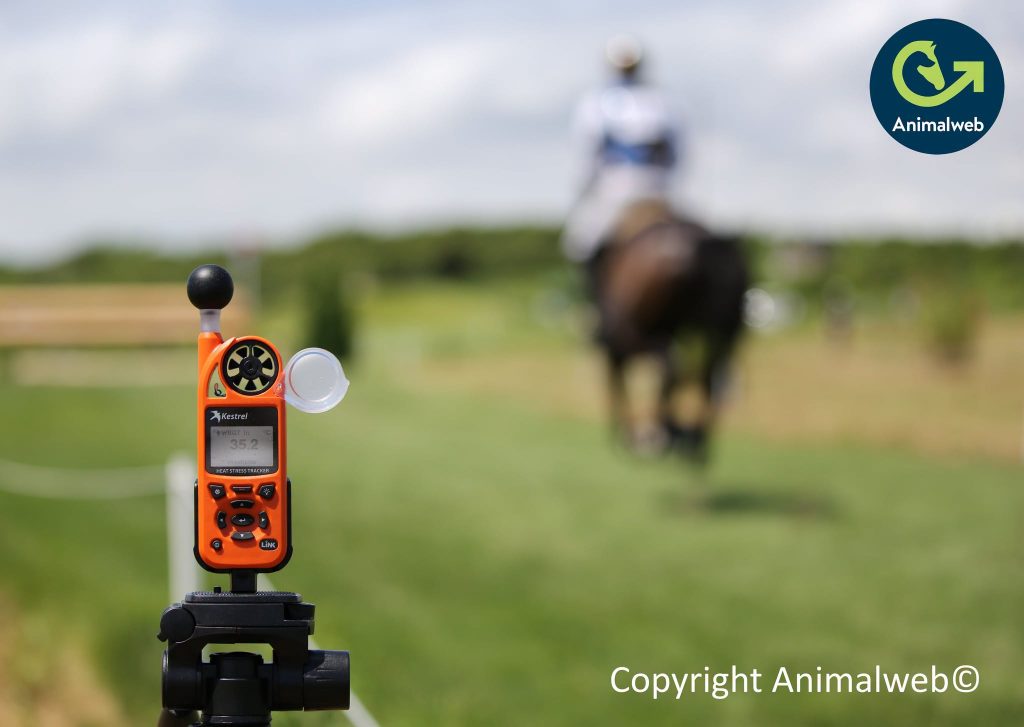
Unlike the Heat Index, which combines air temperature and humidity and was developed for human heat stress assessment, the WBGT Index provides a more appropriate measure of the thermal environment for exercising horses.
The WBGT Index is calculated using:
0.7 x Wet Bulb Temperature + 0.3 x Black Globe Temperature
The FEI guidelines provide the following recommendations:
🟩 Below 28°C
No changes required to competition format or timing. Standard precautions, including access to shade and cooling facilities, should be available.
🟨 28–30°C
Additional precautions may be required, including close monitoring of horses and access to effective cooling.
🟧 30–32°C
Further measures should be considered, such as modifying timings, reducing distances or enhancing cooling strategies.
🟥 32–33°C
Conditions become hazardous, requiring significant modifications and effective cooling measures.
☠️ Above 33°C
Conditions may be unsuitable for safe competition and suspension or major alterations should be considered.
Dr Marlin highlights two important considerations when using WBGT:
1. Measurements should reflect the actual conditions experienced by horses
WBGT should be measured in full sun rather than in shaded areas, where temperatures and radiant heat load may be lower.
2. Heat acclimatisation is important
The FEI guidance applies to heat-acclimatised horses. Horses that are trained in cooler conditions and then compete in high temperatures may not have developed the adaptations needed to cope with increased heat load, potentially increasing the risk of heat-related illness and earlier fatigue.
As climate patterns continue to change, understanding environmental conditions and using appropriate risk assessment tools are essential parts of responsible horse management.
For more information about WBGT and managing horses in hot weather, visit Ask Animal Web